Plough Parts Names and Functions
Published: 9 Oct 2025
A plough is an essential farming tool used to prepare soil for planting. It helps turn and loosen the soil, making it ready for crops. Understanding plough parts names and functions helps farmers maintain their tools better and get smoother farming results. Let’s look at each part and learn what it does.
Plough Parts Names and Their Functions
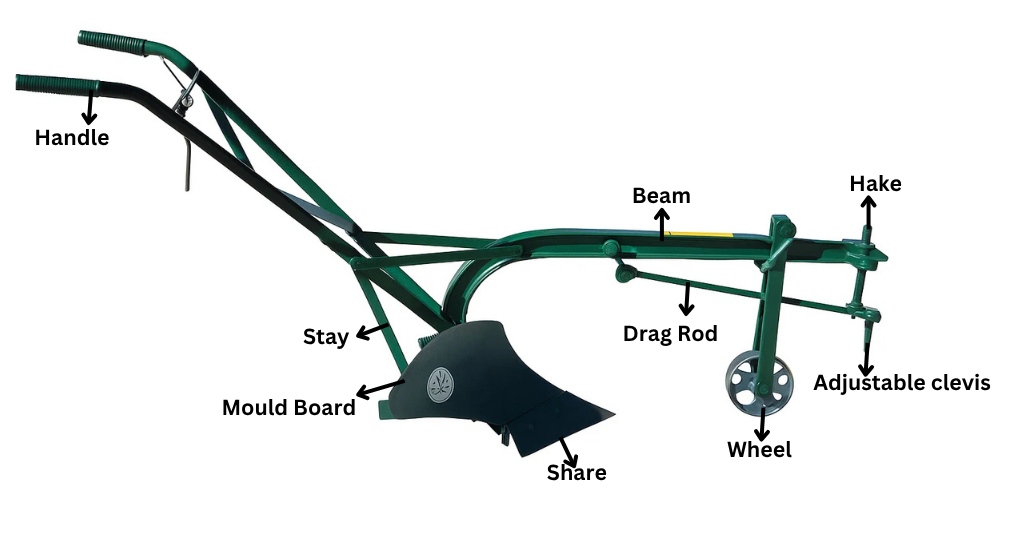
1. Handle
The handle helps the farmer guide and control the plough while working. It gives direction and balance, making the plough easier to move through the soil.
2. Stay
The stay connects the beam and handle, keeping the plough firm and steady. It adds strength to the whole structure, preventing shaking during use.
3. Mould Board
The mould board turns over the soil that has been cut by the share. It helps bury weeds and old plants under the ground, leaving the field smooth and clean.
4. Share
The share is the sharp part that cuts into the soil. It slices the ground to prepare it for turning, making it one of the most important parts of a plough.
5. Beam
The beam is the long wooden or metal bar that joins the plough to the animal or tractor. It carries the pulling force and helps the plough move forward evenly.
6. Hake
The hake is a curved metal hook fixed to the beam. It connects to the yoke or chain used for pulling the plough. It helps in adjusting the pull as needed.
7. Adjustable Clevis
The adjustable clevis is a metal fitting at the front of the beam. It allows farmers to change the angle or height of the plough easily. This helps control the depth and smoothness of ploughing.
8. Wheel
The wheel supports the front part of the plough and helps it roll smoothly over the ground. It keeps the plough at an even depth and makes it easier to handle.
9. Drag Rod
The drag rod connects the wheel and the beam, giving extra support to the plough. It helps maintain correct alignment and keeps the plough steady during movement.
Conclusion
Each part of a plough has a special role that makes soil preparation easier and more efficient. From the share that cuts the soil to the mould board that turns it, every component works together to create a perfect seedbed. By understanding plough parts names and functions, farmers can take better care of their tools and improve their farming results year after year.


- Be Respectful
- Stay Relevant
- Stay Positive
- True Feedback
- Encourage Discussion
- Avoid Spamming
- No Fake News
- Don't Copy-Paste
- No Personal Attacks
- Be Respectful
- Stay Relevant
- Stay Positive
- True Feedback
- Encourage Discussion
- Avoid Spamming
- No Fake News
- Don't Copy-Paste
- No Personal Attacks
