Difference Between Single Point and Multipoint Cutting Tool
Published: 5 Jul 2025
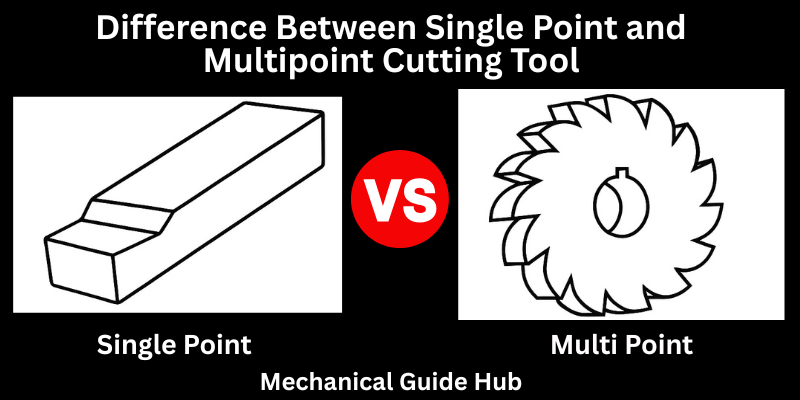
Cutting tools are used in machines to shape, trim, or remove extra material from workpieces like metal, wood, or plastic. These cutting tools are grouped into two types—single-point and multi-point cutting tools—based on the number of cutting edges they have. Let’s explore all possible differences between them in a clear and easy way, including some advanced but simple-to-understand ideas.
Single Point Cutting Tool
- It has only one main edge that performs all the cutting work. Even if the tool has more edges, only one is used at a time.
- It has one edge to remove the full amount of material, so it works harder.
- It is used on lathes, shapers, slotters, boring machines, and fly-cutting machines.
- The cutting edge remains in constant contact with the workpiece during cutting.
- One edge bears the full chip load, increasing cutting pressure and tool wear.
- Generates more heat in one area, which may cause tool damage or faster wear.
- Works at low speeds to reduce heat and protect the tool edge.
- Lower feed rates and a deeper cut are needed to avoid tool failure.
- Lower MRR—cuts slowly and removes less material at a time.
- Leaves a fairly smooth surface, but may need finishing.
- Wears out quickly because one edge does all the work.
- If the edge breaks, the whole process must stop, and the tool must be changed.
- May cause more vibration, especially in tough materials.
- Simple to sharpen and easy to reuse.
- It is easy to design, shape, and manufacture.
- Less expensive both to buy and to maintain.
- Best for roughing or shaping, where speed isn’t a big concern.
- Form long chips, which may be hard to remove.
- Not ideal for cutting extremely hard materials.
- E.g., shaping tool, fly cutter, turning tool, etc.
Multi-Point Cutting Tool
- It has two or more cutting edges. All cutting edges contact the workpiece simultaneously. Some tools may have dozens or even hundreds of edges, like grinding wheels.
- The material is shared among all edges, so each one removes less, reducing stress on each edge.
- It is used in drilling, milling, grinding, broaching, reaming, and hobbing machines.
- Edges engage and disengage often. This allows heat to escape, but may also cause vibration.
- The total cutting load is shared by all edges, which reduces pressure on each one and increases the tool’s lifespan.
- Heat is spread out, and edges cool when they disengage from the material.
- Can run at higher speeds, since the edges don’t stay in contact continuously.
- High feed and depth of cut are possible, which helps with fast cutting.
- Increase Material Removal Rate (MRR) by removing more material in less time through high-speed cutting.
- It gives a clean, polished surface in most cases.
- Lasts longer since the work is shared among many edges.
- If one edge breaks, others can still work, so the job may continue for a while.
- Usually more stable, but sometimes vibration occurs due to edge entry/exit.
- More difficult to sharpen, needs proper tools and care.
- It is complex to design and takes more time and skill to make.
- More expensive, but gives higher performance and speed.
- Perfect for high-speed machining and precision finishing across various industries.
- Form short chips, which are easy to handle and remove.
- Works better on hard materials due to a shared cutting load.
- Examples include drill bits, milling cutters, grinding wheels, broaches, and more.
Conclusion
If your job needs slow, careful shaping at a low cost, a single-point tool is the better choice. But if you need fast cutting, smoother surfaces, and longer tool life, go with a multi-point tool. Knowing the differences helps you pick the right tool and get the best results in your workshop or factory.
Latest Posts

Please Write Your Comments

` Comments (0)

INSTRUCTIONS:
- Be Respectful
- Stay Relevant
- Stay Positive
- True Feedback
- Encourage Discussion
- Avoid Spamming
- No Fake News
- Don't Copy-Paste
- No Personal Attacks
INSTRUCTIONS:
- Be Respectful
- Stay Relevant
- Stay Positive
- True Feedback
- Encourage Discussion
- Avoid Spamming
- No Fake News
- Don't Copy-Paste
- No Personal Attacks
