What is a Cooling Tower? Working, Main Parts, and Applications
Published: 9 Mar 2026
In this article, you will learn what a cooling tower is, its main parts, working, and its applications in simple and easy words.
What is a Cooling Tower
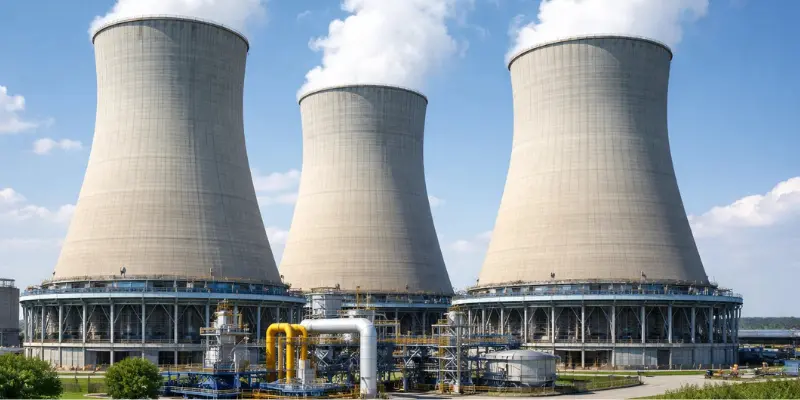
A cooling tower is a structure or device that removes heat from hot water. It works by allowing air to pass through the water while a small part of it evaporates, which cools the remaining water. Cooling towers are common in factories, power plants, and large buildings that use large amounts of hot water. Industries use cooling towers to control temperature and protect equipment. They help prevent machines from overheating, improve efficiency, and save energy and water.
Cooling Tower Components
A cooling tower has many important parts. Each part helps the tower cool hot water. These parts work together to remove heat from the water.
Here are some main parts of a cooling tower.
Water Distribution System
The water distribution system spreads hot water inside the tower. It sends water to spray nozzles. This system helps water spread evenly.
Spray Nozzles
Spray nozzles break water into small droplets. Small droplets cool faster. This improves the cooling process.
Cooling Tower Fill
The fill is a special material inside the tower. It spreads the water over a larger surface so air can cool it more effectively. This helps remove more heat from the water.
Air Inlet
Fresh air flows into the cooling tower through the air inlet. It then passes through the falling water and helps reduce the water temperature.
Fan
The fan moves air through the cooling tower. It increases airflow inside the tower. This makes the cooling process faster.
Drift Eliminator
The drift eliminator stops water droplets from leaving the tower. It saves water and keeps the system efficient.
Cold Water Basin
The cold water basin is located at the base of the tower and collects the water after the cooling process. The system sends this water back to the machines for reuse.
Cooling Tower Working
A cooling tower cools water using the principle of evaporative cooling. It reduces the temperature of hot water coming from industrial machines or systems. The cooling process mainly occurs through air movement and partial evaporation of water.
1. Hot water enters the tower
Heated water from equipment or industrial processes flows into the cooling tower through a pipe.
2. Water is sprayed inside the tower
The water distribution system and spray nozzles spread the water into small droplets, allowing it to cover a larger surface area.
3. Air moves through the tower
Air is pulled or pushed into the tower by natural draft or fans. As the water falls in tiny droplets, air flows around them to carry away heat.
4. Heat is removed by evaporation
A small amount of water turns into vapor when it comes in contact with moving air. This process carries away heat and cools the remaining water.
5. Cooled water collects at the bottom
After losing heat, the cooler water flows downward and gathers in the basin at the base of the tower. It is then pumped back to the system for reuse.
Types of Cooling Tower
Cooling towers come in many types. Each type works a little differently. Industries choose them based on water flow, air flow, and space.
Natural Draft Cooling Towers
In natural draft towers, hot air moves up by itself, so a fan is not required. These towers are tall and wide. They are common in power plants.
Induced Draft Cooling Towers
Induced draft towers use a fan at the top to pull air upward through the tower. Hot water flows down, and air moves up. These towers are efficient and compact.
Crossflow Cooling Towers
In crossflow towers, water flows vertically while air flows horizontally. This makes cooling fast and simple. Maintenance is easy in crossflow towers.
Forced Draft Cooling Towers
Forced draft towers have a fan at the base that pushes air into the tower. Water flows through the tower and cools quickly. These towers are smaller than natural draft towers.
Counterflow Cooling Towers
In counterflow towers, air flows upwards, and water flows downwards. This makes maximum contact between air and water, so water cools efficiently.
Advantages of Cooling Tower
Cooling towers have many advantages. They help industries save energy and water. Here are the main benefits:
Cools water efficiently – Cooling towers remove heat from water quickly.
Saves water – They reuse water in the system instead of wasting it.
Reduces machine damage – Machines stay cool and last longer.
Energy saving – Less energy is needed to cool water compared to other methods.
Environment-friendly – They use air and evaporation, not harmful chemicals.
Disadvantages of Cooling Tower
Although cooling towers are very useful, they also have some disadvantages:
High initial cost – Building a cooling tower can be expensive.
Needs regular maintenance – Fans, nozzles, and basin must be cleaned often.
Takes space – Large towers need a lot of land.
Water loss – Some water evaporates and is lost.
Noise – Fans and water flow can make noise.
Application of Cooling Tower
Cooling towers are used in many industries and systems. They help keep water and machines cool. Here are the main applications:
Power Plants – Cooling towers remove heat from water used in electricity generation.
Chemical Industry – They cool water for chemical processes and equipment.
HVAC Systems – Large buildings use cooling towers for air conditioning.
Manufacturing Plants – Factories use them to cool machines and water systems.
Refineries and Oil Plants – They help remove heat from industrial processes.
Conclusion
A cooling tower is an important device that removes heat from hot water and sends the cooled water back to the system. It works through the process of evaporation and the movement of air. In this article, you have learned what a cooling tower is, how it works, its main components, as well as its advantages, disadvantages, and practical applications.


- Be Respectful
- Stay Relevant
- Stay Positive
- True Feedback
- Encourage Discussion
- Avoid Spamming
- No Fake News
- Don't Copy-Paste
- No Personal Attacks
- Be Respectful
- Stay Relevant
- Stay Positive
- True Feedback
- Encourage Discussion
- Avoid Spamming
- No Fake News
- Don't Copy-Paste
- No Personal Attacks
