50 Basic Parts of a Car and Their Functions for Beginners
Published: 6 Feb 2026
If you want to understand how a car works, the first step is to learn about its parts. Many beginners, students, and new drivers want simple and clear information so they can take better care of their vehicle and avoid confusion at the workshop. Knowing the basic parts of a car helps you drive safely, save money on repairs, and speak confidently with a mechanic.
In this article, I will guide you step by step in very easy words so you can understand everything without any technical confusion. Whether you are a beginner or just want to improve your car knowledge, this guide is for you. In this article, you will understand 50 basic parts of a car and their functions in a simple and clear way.
What are the parts of a car?
A car has many parts. Each part has an important role in making the car run smoothly. Inside the car, you find seats, a dashboard, and the steering system. Outside the car, there are tires, headlights, and bumpers. Some parts help the car move, like the engine and transmission. Others keep it safe, like brakes and airbags. All these parts work together to make the car function properly.
List of Car Parts Names:
A car consists of many parts. Knowing these parts can help you understand how a car works. Here is a complete list of 50 basic car parts names every beginner should know.
- Engine
- Transmission
- Gearbox
- Clutch
- Radiator
- Battery
- Alternator
- Starter Motor
- Fuel Tank
- Fuel Pump
- Fuel Filter
- Air Filter
- Exhaust System
- Muffler
- Catalytic Converter
- Steering Wheel
- Steering System
- Suspension System
- Shock Absorbers
- Springs
- Braking System
- Brake Pads
- Brake Discs
- Brake Calipers
- Wheels
- Tires
- Rims
- Axle
- Driveshaft
- Differential
- Dashboard
- Speedometer
- Odometer
- Headlights
- Taillights
- Indicators
- Horn
- Windshield
- Windows
- Side Mirrors
- Doors
- Hood
- Trunk
- Bumpers
- Seats
- Seat Belts
- Airbags
- Air Conditioning System
- Fuse Box
- Wipers
Car Parts Diagram
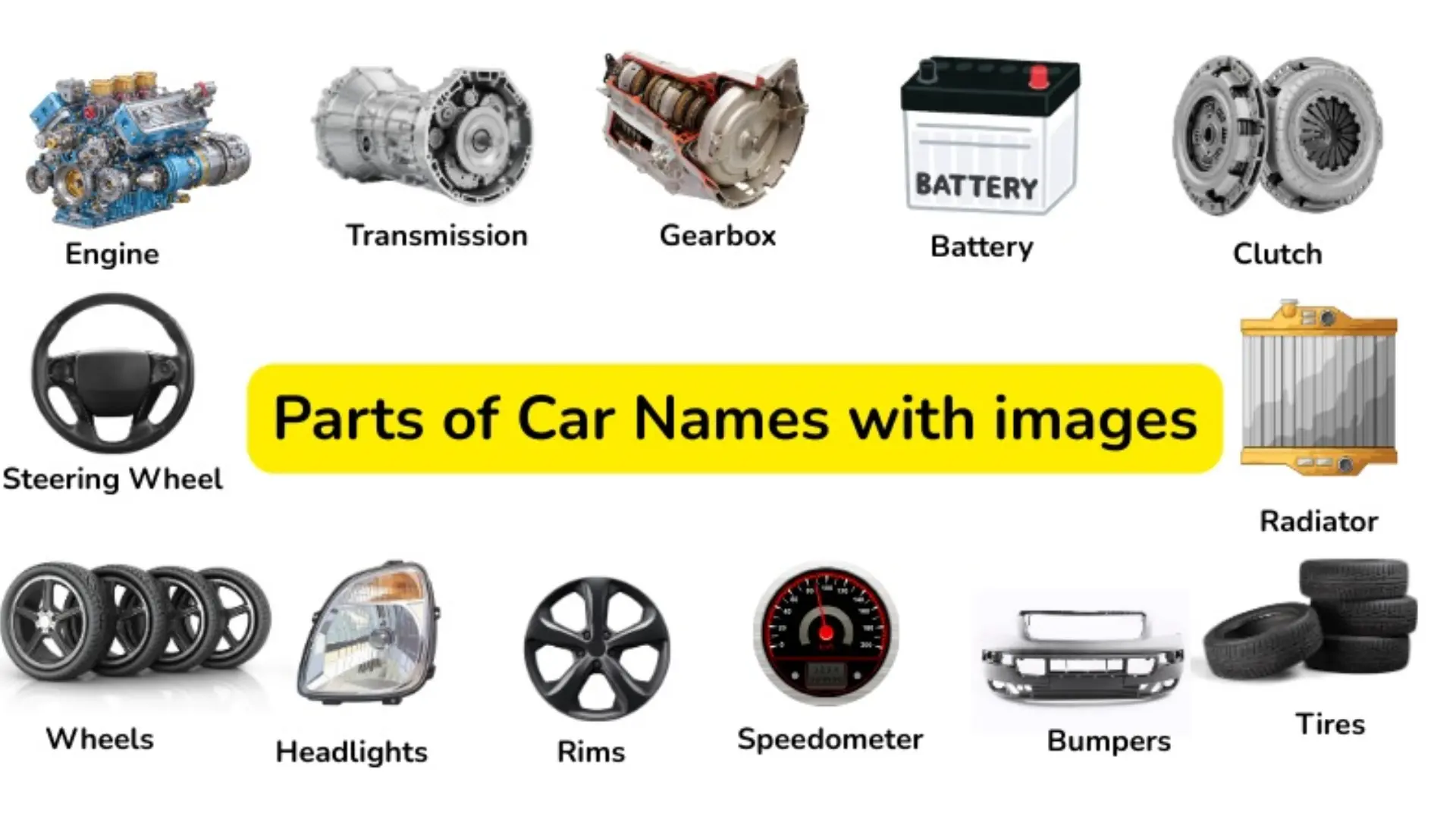
Let’s explore different parts of car in details
1. Engine
The engine is the heart of a car. It provides power to the vehicle and enables it to move. Without the engine, the car cannot run. It works by burning fuel to generate energy, which helps the car start, move, and run smoothly.
Functions of the Engine:
- It produces power to move the car
- It converts fuel into energy
- It starts the car with the help of the starter motor
Tip: Check engine oil regularly to keep the engine running smoothly and avoid damage.
2. Transmission
The transmission is connected to the engine and helps the car move at different speeds. It controls how much power goes from the engine to the wheels. Without the transmission, the car cannot change speed or move smoothly on roads.
Functions of the Transmission:
- Transfers power from the engine to the wheels
- It allows the car to change speeds easily
- It helps the car move forward and backward
- It improves fuel efficiency by controlling engine power
Tip: Keep the transmission fluid topped up to ensure smooth gear shifts and a long life.
3. Gearbox
The gearbox is a part of the transmission system that helps the car use power efficiently. It changes the gear ratios, making it easier for the car to move on different roads and speeds. Without the gearbox, the engine would struggle, and driving would be very hard.
Functions of the Gearbox:
- It adjusts engine power to control speed
- It makes driving uphill or downhill easier
- It helps the car accelerate smoothly
- It reduces strain on the engine
Tip: Inspect the gearbox for leaks and proper operation to prevent gear problems.
4. Clutch
The clutch is a part that connects and disconnects the engine from the wheels. It helps the car start smoothly and change gears without jerking. Without the clutch, driving a manual car would be very difficult.
Functions of the Clutch:
- It engages and disengages engine power to the wheels
- It helps in smooth gear changes
- It allows the car to start without stalling
- It makes driving more comfortable and safe
Tip: Avoid riding the clutch and check it regularly to maintain smooth driving.
5. Radiator
The radiator keeps the engine cool while the car is running. It prevents the engine from overheating by passing coolant through it. Without the radiator, the engine can get damaged very quickly.
Functions of the Radiator:
- It cools down the engine to prevent overheating
- Circulates coolant throughout the engine
- It maintains the engine at a safe temperature
- It protects engine parts from heat damage
Tip: Keep the radiator clean and filled with coolant to prevent engine overheating.
6. Battery
The battery provides electrical power to start the car and run its electrical systems. It stores energy and delivers it when needed. Without the battery, the car cannot start or operate the lights, radio, or other electrical parts.
Functions of the Battery:
- It powers the car’s starter motor to start the engine
- It supplies electricity to the lights, the horn, and other electrical systems
- It stores energy for future use
- It supports the alternator in running car electronics
- It helps keep the car running smoothly
Tip: Check battery connections and charge regularly to avoid starting problems.
7. Alternator
The alternator keeps the car’s battery charged while the engine is running. It produces electricity for all the electrical systems in the car. Without the alternator, the battery would drain quickly, and electrical parts like lights or the radio would stop working.
Functions of the Alternator:
- It generates electricity to power the car’s electrical systems
- It keeps the battery fully charged
- It provides energy for headlights, AC, and infotainment
- It prevents a car breakdown due to power loss
Tip: Inspect the alternator to keep the battery charged and electronics running.
8. Starter Motor
The starter motor helps the engine start moving when you turn the key or press the ignition button. It draws power from the battery to spin the engine quickly. Without the starter motor, the car cannot start and remain stationary.
Functions of the Starter Motor:
- It uses battery power to rotate the engine
- It engages the engine for initial movement
- It works only when the ignition is on
- It provides a smooth and reliable start
Tip: Test the starter motor occasionally to ensure the car starts easily every time.
9. Fuel Tank
The fuel tank holds the fuel your car needs to run. It keeps the fuel safe until the engine uses it. Always make sure your fuel tank is full and not damaged so your car can drive safely.
Functions of the Fuel Tank:
- It stores petrol or diesel for the engine
- It sends fuel to the engine when needed
- It keeps the fuel safe and stops it from leaking
- It works with the fuel pump to give steady fuel
Tip: Keep the fuel tank clean and avoid running it empty to protect the fuel pump.
10. Fuel Pump
The fuel pump moves fuel from the tank to the engine. It makes sure the engine gets the right amount of fuel to run properly. Always check your fuel pump to prevent the car from stopping suddenly while driving.
Functions of the Fuel Pump:
- It pushes fuel from the tank to the engine
- It gives fuel steadily, so the engine runs smoothly
- It helps the car start easily
- It works with the fuel filter to keep fuel clean
Tip: Always keep your fuel pump clean and check it during regular car service for smooth driving.
11. Fuel Filter
The fuel filter cleans the fuel before it reaches the engine. It stops dirt and small particles from entering the engine. A clean fuel filter helps your car run smoothly and prevents engine problems.
Functions of the Fuel Filter:
- It filters dirt and particles from the fuel
- It protects the engine from damage
- It helps the car start and run smoothly
Tip: Replace your fuel filter regularly to avoid engine trouble and keep your car running well.
12. Air Filter
The air filter cleans the air before it enters the engine. It stops dust and dirt from reaching the engine. A clean air filter helps the car run smoothly and saves fuel.
Functions of the Air Filter
- It protects the engine from damage
- It helps the engine work efficiently
- It improves fuel efficiency
- It supports smooth car performance
Tip: Check and clean your air filter regularly to improve engine performance and reduce friction.
13. Exhaust System
The exhaust system removes harmful gases from the engine and releases them safely outside. It helps the car run quietly and keeps the air around cleaner. A good exhaust system also improves engine performance.
Functions of the Exhaust System:
- It reduces noise from the engine
- It helps the engine run efficiently
- It supports fuel efficiency
- It protects the environment by reducing pollution
Tip: Inspect your exhaust system regularly to avoid smoke, noise, and pollution problems.
14. Muffler
The muffler makes the car run quietly by reducing engine noise. It is part of the exhaust system and helps keep driving comfortable. A well-maintained muffler ensures your car is peaceful for you and others on the road.
Functions of the Muffler:
- It reduces loud sounds from the engine
- It helps the exhaust system work smoothly
- It makes driving quieter and more comfortable
- It supports proper airflow in the exhaust
Tip: Check your muffler for holes or rust regularly to keep your car quiet and safe.
15. Catalytic Converter
The catalytic converter cleans harmful gases from the car before they leave the exhaust. It helps reduce pollution and keeps the air around us safer. A working catalytic converter also helps the car run better and meet environmental rules.
Functions of the Catalytic Converter:
- It reduces smoke and air pollution
- It supports smooth engine performance
- It helps meet environmental safety standards
- It works with the exhaust system for clean emissions
Tip: Make sure your catalytic converter is working properly to protect the environment and your car’s performance.
16. Steering Wheel
The steering wheel helps you control the direction of your car. Turning it left or right moves the wheels so you can drive safely. A comfortable steering wheel makes driving easier and more enjoyable.
Functions of the Steering Wheel:
- It controls the car’s direction
- It works with the steering system for smooth turns
- It helps in parking and maneuvering
- It provides a grip for safe driving
Tip: Always keep your hands on the steering wheel and maintain it properly for safe driving.
17. Steering System
The steering system connects the steering wheel to the car’s wheels. It helps you turn the car easily and control it safely on roads. A well-maintained steering system makes driving smooth and reduces effort.
Functions of the Steering System:
- It helps the car turn left, right, or go straight
- It works with the suspension for smooth handling
- It reduces the effort needed to steer the car
- It provides stability while driving
Tip: Check the steering system regularly to avoid loose or stiff steering while driving.
18. Suspension System
The suspension system supports the car and absorbs shocks from bumpy roads. It makes driving smooth and keeps passengers comfortable. A good suspension system also helps the car handle corners safely.
Functions of the Suspension System:
- It keeps the car stable on uneven surfaces
- It supports smooth and comfortable rides
- It helps maintain tire contact with the road
- It improves handling and control during turns
- It protects the car’s body and parts from damage
Tip: Inspect your suspension system regularly to avoid bumpy rides and maintain control.
19. Shock Absorbers
Shock absorbers reduce the bumps and vibrations when the car drives on rough roads. They keep the ride smooth and prevent the car from bouncing too much. Healthy shock absorbers make driving safer and more comfortable.
Functions of the Shock Absorbers:
- It absorbs shocks from uneven roads
- It keeps the car stable and balanced
- It improves comfort for passengers
- It helps maintain tire contact with the road
Tip: Check your shock absorbers regularly to maintain a smooth and safe ride.
20. Springs
Springs are part of the suspension system. They support the car’s weight and absorb bumps from the road. Good springs make rides smoother and protect the car from shocks.
Functions of the Springs:
- It supports the car’s weight
- It absorbs shocks from rough roads
- It helps keep the car stable and balanced
- It works with shock absorbers for a smooth ride
- It improves comfort for passengers
Tip: Inspect your springs regularly to avoid bumpy rides and maintain control of your car.
21. Braking System
The braking system helps the car stop safely when you press the brake pedal. It keeps you and other passengers safe on the road. A well-maintained braking system ensures smooth and reliable stopping.
Functions of the Braking System:
- It slows down or stops the car when needed
- It provides control while driving
- It works with brake pads and discs to apply pressure
- It supports smooth and steady stopping
Tip: Check your braking system regularly for safe and reliable driving.
22. Brake Pads
Brake pads press against the brake discs to stop the car when you press the brake pedal. They are very important for safe driving. Good brake pads help the car stop quickly without slipping.
Functions of the Brake Pads:
- Press against the brake discs to slow or stop the car
- It provides safe braking in traffic and emergencies
- It reduces the distance needed to stop the car
- It protects other braking system parts from damage
- It helps maintain smooth and steady braking
Tip: Replace your brake pads on time to keep braking safe and effective.
23. Brake Discs
Brake discs work with brake pads to stop the car. When the pads press on the discs, the car slows down or stops. Good brake discs help the car stop safely and smoothly every time.
Functions of the Brake Discs:
- It provides a surface for brake pads to press on
- It helps slow down or stop the car efficiently
- It works with brake pads to prevent slipping
- It reduces wear on other brake components
Tip: Inspect brake discs regularly for wear or damage to ensure safe braking.
24. Brake Calipers
Brake calipers hold the brake pads and push them against the brake discs when you press the brake pedal. They help the car stop safely and smoothly. Well-functioning calipers make braking quick and reliable.
Functions of the Brake Calipers:
- Press the brake pads against the brake discs to stop the car
- It helps reduce stopping distance
- It works with other brake parts for safety
- It prevents brake system damage
Tip: Check your brake calipers regularly to keep braking safe and effective.
25. Wheels
Wheels help the car move by turning on the road. They carry the weight of the car and work with tires for smooth driving. Good wheels keep the car stable and make driving safer.
Functions of the Wheels:
- It supports the car’s weight
- It allows the car to move forward and backward
- It works with tires for traction and grip
- It helps maintain balance on the road
Tip: Check wheels regularly for damage or alignment issues to drive safely.
26. Tires
Tires are the rubber parts that touch the road. They give grip, support the car’s weight, and help it move safely. Good tires improve comfort and prevent slipping.
Functions of the Tires:
- It provides traction on different road surfaces
- It supports the car’s weight
- It absorbs shocks from bumps and uneven roads
- It helps maintain control while turning or braking
Tip: Check tire pressure and tread regularly for safe and comfortable driving.
27. Rims
Rims are the metal circles that hold the tires on the wheels. They give strength to the tires and help the car move safely. Strong rims also improve the car’s look and performance.
Functions of the Rims:
- It holds the tires firmly on the wheels
- It supports the weight of the car
- It provides stability while driving
- It helps maintain smooth tire rotation
- It protects tires from damage
- It works with suspension for safe rides
- It improves the car’s overall performance
Tip: Check rims for dents or cracks regularly to keep driving safely and smoothly.
28. Axle
The axle is a rod that connects the wheels and supports the car’s weight. It helps the wheels turn and keeps the car balanced. A strong axle makes driving safer and smoother.
Functions of the Axle:
- It connects the wheels on the car
- It supports the car’s weight
- It helps the wheels rotate
- It maintains balance and stability
- It works with suspension for smooth rides
- It reduces wear on other car parts
Tip: Check your axles regularly for damage to keep your car stable and safe.
29. Driveshaft
The driveshaft transfers power from the engine to the wheels. It helps the car move smoothly and efficiently. A healthy driveshaft makes driving safe and keeps the car running well.
Functions of the Driveshaft:
- It transfers engine power to the wheels
- It supports smooth car movement
- It maintains balance while driving
- It reduces stress on other car parts
- It helps the car handle turns safely
Tip: Inspect your driveshaft regularly for damage or wear to avoid sudden breakdowns.
30. Differential
The differential helps the car’s wheels turn at different speeds, especially while turning. It makes driving smoother and prevents tire wear. A good differential keeps the car safe and easy to control.
Functions of the Differential:
- It allows wheels to rotate at different speeds
- It supports smooth turning on roads
- It helps maintain balance and stability
- It works with the driveshaft for proper power transfer
- It improves handling on all types of roads
Tip: Check your differential regularly and change oil as needed for smooth driving.
31. Dashboard
The dashboard is the front panel inside the car. It shows important information like speed, fuel, and warnings. A clear dashboard helps you drive safely and know your car’s condition.
Functions of the Dashboard:
- It displays speed, fuel level, and engine warnings
- It shows important indicators for safe driving
- It helps monitor car performance easily
- It provides control over lights and other systems
- It keeps the driver informed about car’s status
Tip: Keep the dashboard clean and check indicators regularly to stay informed while driving.
32. Speedometer
The speedometer shows how fast your car is moving. It helps you drive at a safe speed and follow traffic rules. A working speedometer keeps you and others safe on the road.
Functions of the Speedometer:
- It displays the car’s current speed
- It helps maintain a safe driving speed
- It prevents speeding and accidents
Tip: Check your speedometer regularly to make sure it shows the correct speed for safe driving.
33. Odometer
The odometer shows how far your car has traveled. It helps you track the distance for maintenance and fuel planning. A working odometer keeps your car’s records accurate.
Functions of the Odometer:
- It shows the total distance traveled by the car
- It helps plan fuel stops and maintenance
- It keeps track of car usage
- It supports timely servicing and oil changes
- It works with trip meters for daily distance tracking
Tip: Check your odometer regularly to keep track of distance and plan car maintenance.
34. Headlights
Headlights light up the road in front of your car when it is dark. They help you see clearly and make your car visible to others. Working headlights keep you safe while driving at night or in poor weather.
Functions of the Headlights:
- It illuminates the road for safe driving at night
- It makes the car visible to other drivers
- It helps in spotting obstacles and road signs
- It supports safe driving in rain, fog, or snow
- It reduces the risk of accidents in low light
- It improves overall driving safety
Tip: Check your headlights regularly and replace bulbs if dim for clear vision.
35. Taillights
Taillights are at the back of your car and light up when you press the brakes or drive at night. They tell other drivers when you are stopping or turning. Working taillights keep you and others safe on the road.
Functions of the Taillights:
- It shows your car’s position to other drivers
- It lights up when the brakes are applied
- It improves visibility at night or in bad weather
- It helps prevent accidents from behind
- It works with brake lights and indicators
- It supports safe driving in all conditions
Tip: Check your taillights regularly to ensure they work properly and keep driving safely.
36. Indicators
Indicators, also called turn signals, show other drivers when you want to turn or change lanes. They help prevent accidents by giving clear signals. Working indicators make your driving safe and predictable.
Functions of the Indicators:
- It shows your intention to turn left or right
- It alerts other drivers on the road
- It improves safety while changing lanes
- It helps prevent accidents at intersections
- It works with hazard lights in emergencies
- It makes your driving clear and predictable
- It supports safe driving in traffic
Tip: Always use indicators before turning and check them regularly for safety.
37. Horn
The horn makes a sound to alert other drivers or pedestrians. It helps you prevent accidents and stay safe on the road. A working horn is important for communication while driving.
Functions of the Horn:
- Alerts others to your presence
- Warns pedestrians and other vehicles
- It helps prevent collisions in traffic
- It works as a safety tool in emergencies
- It supports safe driving in busy areas
- It improves communication on the road
Tip: Check your horn regularly to make sure it works and keeps you safe.
38. Windshield
The windshield is the front glass of your car. It protects you from wind, dust, and rain while driving. A clean and strong windshield keeps you safe and helps you see the road clearly.
Functions of the Windshield:
- It protects the driver and passengers from wind and dust
- It keeps rain and debris out of the car
- It provides clear visibility while driving
- It supports safety during accidents
- It works with wipers for clean vision
- It reduces air resistance while driving
- It helps maintain the car’s structural integrity
Tip: Keep your windshield clean and check for cracks to stay safe on the road.
39. Windows
Car windows are made of glass and let you see outside while protecting you from wind and rain. They can open or close to let air in or out. Good windows keep you safe and comfortable while driving.
Functions of Windows:
- It allows you to see outside clearly
- It protects from wind, rain, and dust
- Let fresh air in when opened
- It works with locks for safety
- It supports passenger comfort
- It helps reduce noise while driving
- It keeps the car secure and safe
Tip: Keep windows clean and check for cracks to ensure clear vision and safety.
40. Side Mirrors
Side mirrors are the small mirrors on the sides of your car. They help you see cars and obstacles behind or beside you. Working side mirrors make lane changes and reversing safer.
Functions of the Side Mirrors:
- It shows vehicles and objects beside or behind you
- It helps while changing lanes or merging
- It reduces blind spots for safer driving
- It supports smooth and careful maneuvers
- It improves overall road awareness
- It prevents accidents by giving a clear view
Tip: Adjust your side mirrors before driving and check for cracks to stay safe.
41. Doors
Car doors let you enter and exit the vehicle safely. They also protect passengers from outside elements and accidents. Good doors keep the car secure and comfortable.
Functions of the Doors:
- It allows passengers to enter and exit the car
- It protects occupants from wind, rain, and dust
- It supports safety in case of minor accidents
- It works with windows and mirrors for convenience
- It maintains comfort and protection inside the car
Tip: Always check that doors open, close, and lock properly for safety and convenience.
42. Hood
The hood is the cover at the front of the car. It protects the engine and other important parts from dust, rain, and damage. A strong hood keeps the engine safe and your car looking neat.
Functions of the Hood:
- It covers and protects the engine and other components
- It keeps out dust, dirt, and rain
- It provides access for maintenance and repairs
- It supports car safety during minor impacts
- It helps in heat dissipation from the engine
- It maintains the car’s appearance
Tip: Always make sure the hood is properly closed before driving to protect the engine.
43. Trunk
The trunk is the storage space at the back of the car. It holds luggage, groceries, or other items safely while you drive. A clean and organized trunk keeps your car tidy and convenient.
Functions of the Trunk:
- It stores luggage, bags, and other items
- It keeps items safe while driving
- It prevents clutter inside the car
- It provides space for emergency tools or spare parts
- It supports organized travel and trips
- It protects belongings from the weather and theft
- It helps maintain the car’s balance by storing weight properly
Tip: Always lock your trunk and keep it organized for safe and convenient travel.
44. Bumpers
Bumpers are at the front and back of the car. They protect the car’s body and parts during small accidents or bumps. Strong bumpers keep your car safe and reduce damage.
Functions of the Bumpers:
- It absorbs impact in minor collisions
- It protects the car’s body and engine parts
- It reduces repair costs after small accidents
- It improves safety for passengers
- It helps prevent damage to lights and grills
Tip: Check bumpers regularly for cracks or dents to ensure proper protection.
45. Seats
Car seats are where passengers sit while driving. They provide comfort and support during the ride. Good seats make long journeys comfortable and safe.
Functions of the Seats:
- It provides a place to sit for the driver and passengers
- It offers comfort during short or long trips
- It keeps passengers safe with proper design
- It works with seat belts for safety
- It help adjusting the driver’s view and control
- It improves overall ride comfort
Tip: Adjust your seat properly before driving and check for wear to stay comfortable and safe.
46. Seat Belts
Seat belts keep you safe in your seat while driving. They stop you from moving forward during sudden brakes or accidents. Using seat belts reduces the risk of injury.
Functions of the Seat Belts:
- It secures passengers in their seats
- It protects from injuries during sudden stops or accidents
- It helps maintain a proper seating position
- It reduces the risk of being thrown from the car
- It supports safe driving for all passengers
Tip: Always wear your seat belt and make sure all passengers are buckled up.
47. Airbags
Airbags are safety devices that inflate during an accident. They protect passengers from hitting hard surfaces inside the car. Working airbags reduce the risk of serious injuries.
Functions of the Airbags:
- Inflate during collisions to protect passengers
- It reduces impact on the head, chest, and body
- It works with seat belts for maximum safety
- It helps prevent serious injuries
- It provides extra protection in accidents
- It supports safe driving in emergencies
Tip: Make sure your airbags are functional and check them during car service for safety.
48. Air Conditioning System
The air conditioning system keeps the car cool in hot weather. It also removes humidity and provides fresh air inside the car. A working AC system makes driving comfortable for everyone.
Functions of the Air Conditioning System:
- It provides fresh and clean air
- Improves passenger comfort during hot weather
- Supports safe driving by keeping the driver comfortable
- It helps prevent windows from fogging
- It maintains a pleasant environment in the car
Tip: Check your AC system regularly and clean the filters for fresh, cool air.
49. Fuse Box
The fuse box protects the car’s electrical system from damage. It stops too much electricity from harming wires or devices. A working fuse box keeps your car’s electronics safe and reliable.
Functions of the Fuse Box:
- It protects electrical circuits from overload
- It prevents damage to lights, AC, and other devices
- Stops short circuits in the car
- Supports the safe operation of car electronics
- It helps maintain a proper power supply
- It makes troubleshooting easier
Tip: Check the fuse box regularly and replace blown fuses to keep all electronics working properly.
50. Wipers
Wipers clean the windshield when it rains or gets dirty. They help you see clearly and drive safely. Working wipers make driving in rain or snow much easier.
Functions of the Wipers:
- It removes rain, snow, and dirt from the windshield
- It improves visibility while driving
- It prevents water or dust from blocking your view
- It works with washer fluid for better cleaning
Tip: Replace wiper blades regularly to maintain clear visibility and safe driving.
Conclusion
So, guys, we are reaching the end. Let’s close this article with a quick recap. In this post, we have covered the parts of a car in a simple, clear way. I recommend that every beginner learn these parts because they make driving, maintenance, and safety much easier. If you found this guide helpful, share it with others and explore more car-related articles to improve your knowledge.
FAQs about the Parts of a Car
Here are some most frequently asked questions about the components of a car
What is car anatomy?
Car anatomy means the study of all parts of a car and how they work together. It helps you understand both the inside and outside parts of a vehicle. Learning car anatomy makes driving and maintenance easier.
What are the inside parts of a car?
Inside parts are found inside the car. These include seats, dashboard, steering wheel, and airbags. They provide comfort and safety to passengers.
What are the outside parts of a car?
Outside parts are visible from the outside. These include tires, headlights, doors, bumpers, and mirrors. They help with movement, safety, and protection.



- Be Respectful
- Stay Relevant
- Stay Positive
- True Feedback
- Encourage Discussion
- Avoid Spamming
- No Fake News
- Don't Copy-Paste
- No Personal Attacks
- Be Respectful
- Stay Relevant
- Stay Positive
- True Feedback
- Encourage Discussion
- Avoid Spamming
- No Fake News
- Don't Copy-Paste
- No Personal Attacks
