Hydro Power Plant: Components, Working, Advantages, Disadvantages & Applications
Published: 17 Dec 2025
Hydropower plants are one of the most reliable sources of renewable energy, using the natural flow of water to generate electricity. In this article, we will discuss What is a hydro power plant is, its components, site selection, advantages, disadvantages, and applications.
What is Hydro Power Plant?
A hydro power plant is a facility that converts the energy of water into electricity. It usually uses rivers or dams to store water. When water flows or falls, it moves through turbines connected to generators. These generators then produce electrical energy. Hydropower plants are eco-friendly and help reduce dependence on fossil fuels.
Components of Hydro Power Plant
A hydro power plant consists of multiple core components that enable its operation. Some of the main components are listed below:
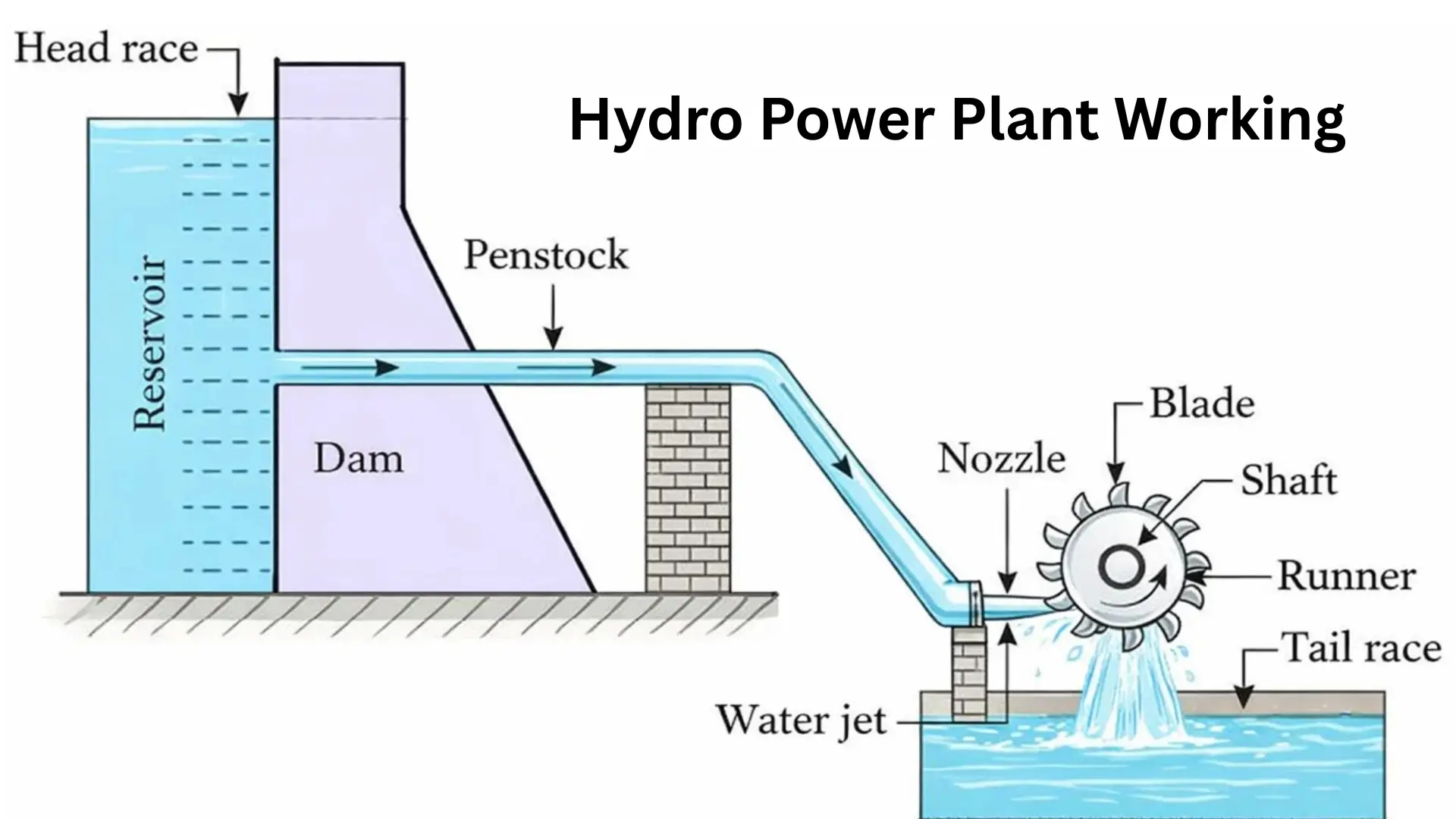
Dam and Reservoir: The dam raises the water level of a river, creating potential energy that can be used for electricity generation. The reservoir stores water, ensuring a steady supply for power production even during dry seasons.
Intake Structure: This structure channels water from the reservoir to the penstock while filtering out debris. Trash racks are installed at the entrance to prevent damage to turbines from floating objects and ice.
Penstock: Large, sloped pipes called penstocks carry water from the intake to the turbines at high pressure. They are designed to withstand the force of water and maintain a consistent flow for optimal energy conversion.
Turbine: The turbine uses the motion of water to generate mechanical energy. When high-pressure water strikes the turbine blades, it rotates the turbine shaft, which drives the generator.
Generator: Connected to the turbine, the generator converts mechanical energy into electrical energy. It is the heart of the hydroelectric system, producing electricity for homes, industries, and businesses.
Surge Tank: A surge tank regulates the pressure in the penstock to prevent damage from sudden water flow changes. It stores excess water temporarily and ensures smooth operation of the turbine and generator.
Draft Tube and Tailrace: The draft tube reduces water velocity as it exits the turbine, directing it safely back into the river through the tailrace. This prevents energy loss and protects the environment downstream.
Powerhouse: The powerhouse houses the turbines, generators, and control equipment in a safe, organized structure. It provides support and maintenance access while allowing operators to monitor and control electricity production efficiently.
Working of Hydro Power Plant
Hydropower works in a simple yet effective process:
- Water from a river or reservoir is collected and stored at a higher elevation to create potential energy, which depends on the height difference of the water.
- The water passes through an intake structure that controls the flow and removes debris to prevent damage to the turbine.
- It flows through large pipes called penstocks, which direct water to the turbine while increasing its speed and pressure.
- High-speed water strikes the turbine blades, causing them to rotate and converting the kinetic energy of water into mechanical energy.
- The turbine is connected to a generator shaft, and as it spins, the generator converts mechanical energy into electrical energy.
- Generated electricity is passed through transformers to increase voltage for efficient long-distance transmission via power lines.
- After passing through the turbine, water is released back into the river or downstream channel, completing the cycle.
- Control systems adjust water flow and electricity production according to demand, ensuring stable and efficient operation of the plant.
Site Selection for Hydro Power Plant
Selecting the right site is critical for hydro power plant efficiency and sustainability. Key factors include:
Availability of Water: Ensure the river or reservoir has a consistent water supply throughout the year.
Water Head: High elevation differences increase the potential energy and power output.
Storage Capacity: Adequate reservoir space to meet seasonal energy demands.
Transportation Facility: Easy access for heavy machinery during construction and maintenance.
Land Cost and Geological Stability: Safe land with minimal risks of landslides or erosion.
Environmental Concerns: Minimize impact on local wildlife, fisheries, and river ecosystems.
Advantages of Hydro Power Plant
Hydropower plants offer multiple benefits:
- Uses flowing water as a renewable and sustainable energy source.
- Produces no harmful gases, helping protect the environment.
- Low operating and maintenance costs after construction.
- Can quickly adjust to electricity demand.
- Dams help control floods and store water for agriculture.
- Long-lasting and reliable energy generation.
Disadvantages of Hydro Power Plant
Despite the advantages, hydro power plants have some drawbacks:
- High initial cost for construction.
- Can affect ecosystems and submerge land.
- Limited to locations with enough water flow and height.
- Electricity generation drops during droughts.
- May require relocation of local communities.
- Rare dam failures can cause severe flooding.
Applications of Hydro Power Plant
Hydropower is versatile and can be applied in multiple areas:
- Provides electricity for homes, industries, and businesses.
- Supports irrigation and water supply for agriculture.
- Helps control floods by managing river water flow.
- Powering small, remote communities through mini and micro-hydro plants.
- Stores energy in reservoirs for peak electricity demand.
- It can be combined with other renewable sources like solar and wind for a stable power supply.
Conclusion
In conclusion, in this article, we covered what is hydro power plant is, its components, site selection, advantages, disadvantages, and applications in detail. Hydropower provides a clean, eco-friendly, and versatile solution for generating electricity. We hope this article helped you to gain a clear understanding of how hydroelectric power works and its role in modern energy systems.


- Be Respectful
- Stay Relevant
- Stay Positive
- True Feedback
- Encourage Discussion
- Avoid Spamming
- No Fake News
- Don't Copy-Paste
- No Personal Attacks
- Be Respectful
- Stay Relevant
- Stay Positive
- True Feedback
- Encourage Discussion
- Avoid Spamming
- No Fake News
- Don't Copy-Paste
- No Personal Attacks
