Babcock and Wilcox Boiler Construction, Working and Applications
Published: 20 Oct 2025
The Babcock and Wilcox boiler is one of the most commonly used water tube boilers in industries. It is known for its high efficiency, durability, and steady steam generation. This type of boiler is widely used in power plants and industries where large amounts of steam are required for different operations. In this article, we’ll explore what the Babcock and Wilcox boiler is, its construction, working, specifications, uses, and drawbacks in simple terms.
What is Babcock and Wilcox Boiler
The Babcock and Wilcox boiler, invented by George Herman Babcock and Stephen Wilcox in 1867, is a horizontal, externally fired, water-tube boiler. In this system, water flows inside the tubes, while hot gases pass over them. This design quickly became popular because of its ability to handle high pressure and produce large quantities of steam efficiently. It is a stationary type boiler that runs on solid fuels like coal.
Construction of Babcock and Wilcox Boiler
Babcock and Wilcox Boiler Diagram
The construction of the Babcock and Wilcox boiler is simple yet effective. Its main parts include:
Water and Steam Drum (Boiler Shell): The main drum holds both water and steam. It is about 8 meters long and 2 meters in diameter. The upper half contains steam, while the lower half contains water.
Water Tubes: Many small water tubes are placed between the drum and the furnace at an angle of 10°–15° to help the water circulate properly.
Uptake and Downtake Headers: The headers connect the water tubes to the steam drum. The uptake header carries hot water upward, and the downtake header brings cooler water downward.
Furnace and Grate: Located below the boiler, the grate holds the burning coal that provides heat.
Baffles: These are firebricks that guide the hot flue gases in a zigzag path over the water tubes, improving heat transfer.
Superheater: The U-shaped superheater is placed near the steam drum. It heats the steam further before it goes to the turbine or engine.
Mud Box: It collects mud and impurities from water tubes. These can be removed regularly through a blow-off valve.
Inspection Doors and Damper: Inspection doors allow easy cleaning, and the damper helps control the flow of flue gases.
Working of Babcock and Wilcox Boiler
The working principle of the Babcock and Wilcox boiler is based on natural water circulation and heat exchange between hot gases and water.
- Coal is placed on the grate and burned in the furnace.
- The heat from burning fuel passes over the inclined water tubes.
- The water inside the tubes absorbs the heat and starts to convert into steam.
- Hot water and steam move upward through the uptake header into the drum.
- In the drum, the steam separates from the water-steam collects at the top, and the water moves down through the downtake header.
- This continuous movement of water and steam is called natural circulation.
- The steam from the drum then passes through the superheater, where it becomes dry and superheated.
- The superheated steam is then sent to engines or turbines to perform useful work.
- The flue gases finally exit through the chimney after transferring heat effectively.
Specification of Babcock and Wilcox Boiler
Type: Water tube, horizontal, stationary boiler
Fuel used: Coal or solid fuel
Working pressure: Up to 40 bar or more
Steam generation capacity: Around 40,000 kg/hr (varies with size)
Efficiency: Approximately 70–75%
Angle of inclination of tubes: 10°–15°
Application of Babcock and Wilcox Boiler
The Babcock and Wilcox boiler is widely used in various fields such as:
- Power plants for generating electricity
- Industrial processing plants like the chemical and textile industries
- Steam turbines and engines for mechanical power
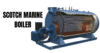
- Marine applications for producing steam in large ships
- Heating systems where a continuous steam supply is required
- Its ability to produce high-pressure steam makes it perfect for heavy-duty industrial use.
Advantages of Babcock and Wilcox Boiler
- It has high efficiency and produces steam quickly.
- It can work at high pressure, making it suitable for power plants.
- It generates a large amount of steam in less time.
- Damaged tubes can be replaced easily without affecting the whole boiler.
- Water circulation is good because of the inclined water tubes.
- It is safer to use since water is inside the small tubes, reducing the explosion risk.
- The heating surface is large, so heat transfer happens faster.
- It needs less space compared to some other large boilers.
- The boiler can run continuously for long hours.
- Inspection and cleaning can be done easily during the operation.
Disadvantages of the Babcock and Wilcox Boiler
- The initial cost is high due to its complex construction.
- It needs skilled operators for maintenance and operation.
- Water treatment is essential to avoid scaling and corrosion inside tubes.
- The boiler requires more space compared to fire tube boilers.
- Regular cleaning and inspection are needed to maintain efficiency.
Conclusion
The Babcock and Wilcox boiler remains one of the most reliable and efficient boilers in the industrial world. Its strong design, high steam generation capacity, and ability to handle pressure make it ideal for the power and process industries. Though it has some drawbacks, its efficiency and durability continue to make it a top choice for large-scale steam production.


- Be Respectful
- Stay Relevant
- Stay Positive
- True Feedback
- Encourage Discussion
- Avoid Spamming
- No Fake News
- Don't Copy-Paste
- No Personal Attacks
- Be Respectful
- Stay Relevant
- Stay Positive
- True Feedback
- Encourage Discussion
- Avoid Spamming
- No Fake News
- Don't Copy-Paste
- No Personal Attacks
