Different Types of Chisels in the Workshop
Published: 12 Oct 2025
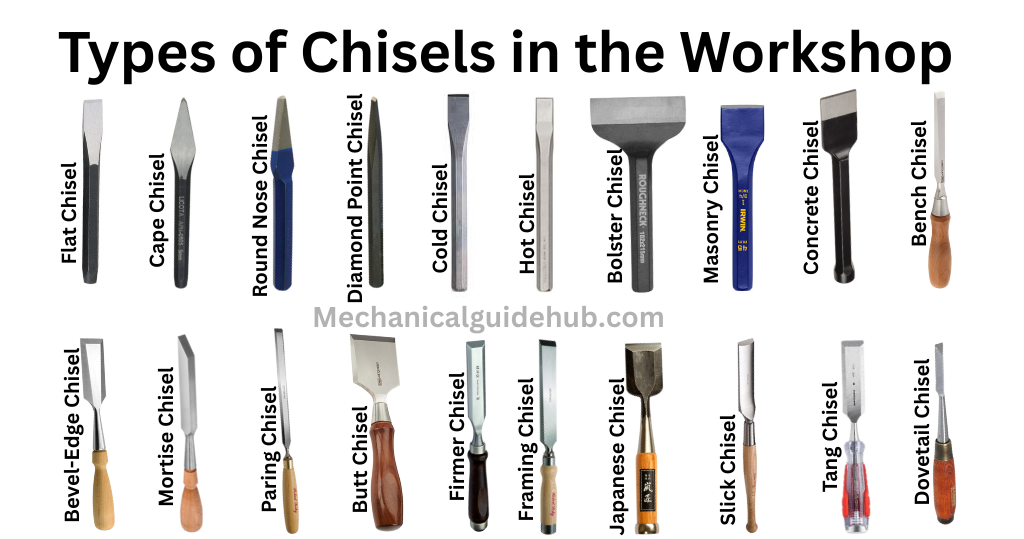
A chisel is one of the oldest and most essential tools used in workshops and construction. It plays a key role in shaping, cutting, carving, and smoothing different materials like wood, metal, or stone. Over the years, chisels have evolved into many designs to suit various tasks, making them an important part of every craftsman’s toolkit. In this article, we will discuss the different types of chisels in the workshop to help you choose the right one for accurate and efficient work.
What Is a Chisel
A chisel is a hand tool with a sharp metal blade used to cut, carve, or shape hard materials like wood, metal, or stone. It works by driving the edge into the material using a hammer or mallet. Chisels are essential in workshops, carpentry, masonry, and metalworking. Their precision makes them one of the oldest and most reliable tools in craftsmanship.
Chisel Parts Name
Blade: The flat metal part that performs the cutting or shaping task.
Bevel: The sloping surface near the edge that forms the cutting angle.
Edge: The sharpened tip that slices through the material.
Shoulder: The section between the blade and the handle that absorbs impact.
Tang or Socket: The portion that connects the blade to the handle securely.
Handle: Provides grip and control, often made from wood or plastic.
Ferrule: A metal band that prevents the handle from splitting under pressure.
Types of Chisels in the Workshop
Below are the most common types of chisels used in workshops, construction, and metal fabrication. Each one serves a specific function and is designed for accuracy and strength.
1. Flat Chisel
The flat chisel is widely used for cutting and shaping metal surfaces. Its straight, broad blade makes it ideal for trimming and smoothing flat materials. It’s perfect for removing unwanted metal layers and burrs. In workshops, it’s often used for leveling and cleaning surfaces.
2. Cross-Cut (Cape) Chisel
The cross-cut chisel has a narrow, tapered blade designed for precision work. It’s used for cutting keyways, grooves, and slots in metal parts. The slim edge provides excellent control in tight spaces. Mechanics and machinists rely on it for fine metal detailing.
3. Round Nose Chisel
This chisel has a semicircular cutting edge suitable for curved cuts. It’s used for creating rounded grooves and oil channels in bearings or machinery. The curved edge ensures smooth, continuous shaping. It’s a common tool in both woodworking and metalworking tasks.
4. Diamond Point Chisel
Featuring a sharp diamond-shaped tip, this chisel is used for cutting V-shaped grooves. It’s perfect for cleaning corners and removing burrs from narrow spaces. The angled tip provides exceptional precision in detailed metalwork. It’s commonly found in fitting and shaping jobs.
5. Cow Mouth Chisel
The cow mouth chisel has a wide, rounded blade resembling a cow’s mouth. It’s used for shaping and trimming rivet heads or round surfaces. Its curved edge allows even material removal. It’s ideal for finishing and decorative metal shaping.
6. Cold Chisel
Made from hardened steel, the cold chisel is used to cut metal at room temperature. It helps remove rivets, bolts, and rough edges on metal sheets. The sharp blade withstands repeated hammer blows without dulling quickly. It’s an essential tool in every mechanical workshop.
7. Hot Chisel
The hot chisel is used for cutting heated metal in blacksmithing. Its blade is slightly blunt to prevent softening from high temperatures. It slices through red-hot steel smoothly and efficiently. This chisel is crucial for shaping and forging metal pieces.
8. Brick (Bolster) Chisel
Also known as a bolster chisel, it has a wide, thick blade used for splitting bricks. It delivers clean cuts and helps shape masonry blocks with precision. Builders often use it for trimming tiles or stones. The broad blade ensures even, controlled breaking of materials.
9. Masonry Chisel
The masonry chisel is made for heavy-duty stone and concrete cutting. Its flat blade removes mortar and chips away hard surfaces. A handguard is often included to protect from hammer strikes. It’s used in stone carving and construction for clean breaks.
10. Concrete Chisel
This chisel is used for breaking and removing hardened concrete. Its strong, beveled edge withstands repeated heavy blows. Ideal for construction repair jobs and demolition work. It efficiently clears away chunks of cement or concrete slabs.
11. Bench Chisel
The bench chisel is a versatile woodworking tool found in most carpenter toolkits. It’s great for chopping, paring, and shaping wooden joints. The medium-sized blade handles both hand and mallet strikes well. It’s the go-to tool for general woodshop tasks.
12. Bevel-Edge Chisel
This chisel has beveled sides that make it easy to reach corners and dovetail joints. It’s used for precision woodworking and fine detailing. The beveled design allows clean cuts without damaging the surrounding wood. It’s a must-have for furniture and joinery work.
13. Mortise Chisel
Mortise chisels feature thick, strong blades made for deep cuts. They’re used to carve rectangular holes called mortises for joints. Their solid structure withstands heavy hammering without bending. It’s a favorite among cabinetmakers and framers.
14. Paring Chisel
The paring chisel has a long, thin, and flexible blade for delicate woodwork. It’s used for shaving and smoothing joints by hand, not with a mallet. The blade allows gentle, controlled paring for detailed finishes. Ideal for trimming tenons and precise fitting work.
15. Butt Chisel
This short, sturdy chisel is perfect for working in tight spaces. It’s used for fitting hinges, locks, and small joints in woodworking. The compact size offers better control and accuracy. Carpenters often use it for cabinet and furniture detailing.
16. Firmer Chisel
The firmer chisel has a thick, rectangular blade for heavy-duty cutting. It’s used for removing large chunks of wood quickly. Its rigid design ensures stability and power during deep cuts. It’s perfect for rough shaping and general carpentry.
17. Framing Chisel
This chisel is designed for timber framing and log construction. It has a long, strong blade that handles deep mortises and large joints. The handle is reinforced to resist repeated hammer strikes. It’s a vital tool for structural woodwork.
18. Japanese Chisel
Japanese chisels are crafted with layered steel for a sharp, durable edge. They’re used for fine woodworking and precise carving. The ferrule strengthens the handle, preventing splitting during strikes. Their balance and sharpness make them ideal for professional craftsmen.
19. Slick Chisel
A slick chisel features an extra-wide blade and a long handle for smoothing wood. It’s perfect for flattening beams, joints, and large surfaces. The long handle provides excellent leverage and control. It’s mostly used in timber frame construction.
20. Tang Chisel
This chisel features a tapered tang that fits inside the handle. It’s used for light cutting, trimming, and shaping tasks. The design provides a secure grip during detailed work. Tang chisels are ideal for delicate carving and finishing.
21. Dovetail Chisel
A dovetail chisel has a slim, beveled blade perfect for narrow joints. It’s used to clean and cut dovetail corners accurately. The slender design helps reach tight angles without damaging the wood. It’s essential for fine joinery and furniture making.
Chisel Tool Uses
- Woodworking: For carving, shaping, and cutting joints with precision.
- Metalworking: To cut cold metals, remove burrs, and create grooves.
- Masonry: For trimming stone, splitting bricks, and shaping blocks.
- Construction: Used in demolition, concrete cutting, and repair work.
- Sculpting: Ideal for artistic detailing and smooth surface finishes.
FAQs
The cape chisel is used for cutting keyways and slots in metal surfaces. Its narrow edge allows clean, precise grooves in confined spaces.
A chisel is a hand tool with a sharpened edge used to cut, carve, or shape materials like wood, metal, and stone.
A chisel is used for shaping, trimming, and carving materials in woodworking, metalworking, and construction projects.
Dressing a chisel means reshaping and sharpening its edge to maintain performance. It helps restore cutting efficiency and prolongs tool life.
Conclusion
Understanding the different types of chisels in the workshop is important for anyone working with wood, metal, or masonry. Each chisel serves a unique purpose, from delicate carving and paring to heavy-duty cutting and shaping. Choosing the right chisel improves precision, efficiency, and safety while working.



- Be Respectful
- Stay Relevant
- Stay Positive
- True Feedback
- Encourage Discussion
- Avoid Spamming
- No Fake News
- Don't Copy-Paste
- No Personal Attacks
- Be Respectful
- Stay Relevant
- Stay Positive
- True Feedback
- Encourage Discussion
- Avoid Spamming
- No Fake News
- Don't Copy-Paste
- No Personal Attacks
