What Is an Ultrasonic Thickness Gauge and How Does It Work?
Published: 11 Jul 2025
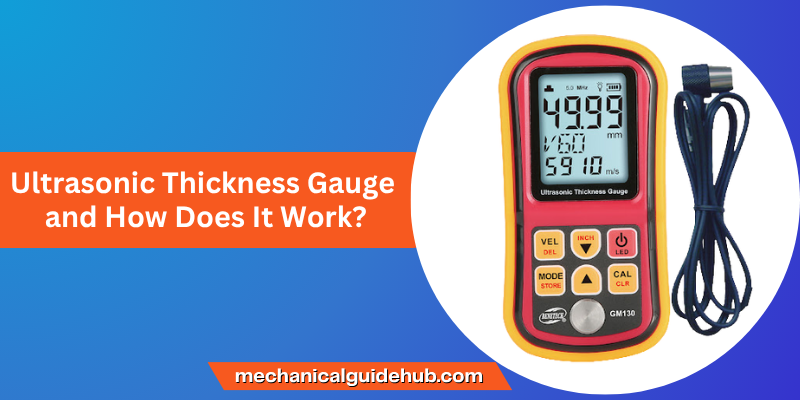
Want to measure material thickness without cutting it? Use an ultrasonic thickness gauge – it’s quick, non-destructive, and accurate. This simple device uses sound waves to tell you how thick a surface is—whether it’s metal, plastic, or even paint. In this guide, we’ll explain what it is, how it works, and how you can use one easily.
What is an Ultrasonic Thickness Gauge?
An ultrasonic thickness gauge is a smart tool that measures the wall thickness of materials, the distance between two surfaces, and also checks for corrosion or erosion inside the materials that are not visible from the outside. It uses a non-destructive technique, which means it doesn’t damage the surface while testing. It works without damaging the surface. You just press it against the surface, and it tells you the thickness. It’s used in many industries, including construction, manufacturing, and safety inspections.
Ultrasonic Thickness Gauge Working Principle
The ultrasonic thickness gauge works using sound waves. Here’s how it happens:
- It sends a small sound wave into the material using a probe.
- This wave travels through the material and bounces back from the other side.
- It records the time the waves take to travel back.
- That time helps it measure the material’s thickness.
It works well on metals, plastics, and many other solid materials. That’s why it’s trusted for checking thickness, wear, or damage—without cutting or breaking anything.
What is an Ultrasonic Thickness Gauge Used for?
Here are some common uses:
- Metal thickness (common in industries)
- Helps measure pipe wall thickness, mainly in oil and gas.
- Paint thickness on cars, walls, and other surfaces
- Checking for corrosion or wear and tear inside materials
- They help you find problems early, without breaking anything open.
How to Use an Ultrasonic Thickness Gauge?
Using this tool is simple. Here’s how.
- Start by switching on the gauge and making sure that it is functioning properly.
- Choose the correct setting for the material you’re testing, like metal, plastic, or glass.
- Apply a small drop of the couplant gel—it helps the sound travel clearly.
- Press the sensor (or probe) gently in the area where you want to measure thickness.
- The gauge shows the result in mm or in inches. That’s it!
Always check the manual for your specific model. It’s a safe and non-destructive way to measure.
Conclusion
The ultrasonic thickness gauge is a smart tool for fast, safe, and accurate thickness measurement. Whether you’re working with pipes, metal, or paint, it gives you instant results without damage. It’s a must-have tool in many industries, and it is easy enough for beginners to use.
FAQs
Prices vary depending on the brand and its features. You can find basic models starting around ₹8,000 and advanced ones that range up to ₹50,000 or more.
Yes, you can. It works well for checking pipe wall thickness to detect wear, corrosion, or thinning.
It’s a special type of ultrasonic gauge that measures how thick a paint or coating is on a material, without scratching or damaging it.



- Be Respectful
- Stay Relevant
- Stay Positive
- True Feedback
- Encourage Discussion
- Avoid Spamming
- No Fake News
- Don't Copy-Paste
- No Personal Attacks
- Be Respectful
- Stay Relevant
- Stay Positive
- True Feedback
- Encourage Discussion
- Avoid Spamming
- No Fake News
- Don't Copy-Paste
- No Personal Attacks
